Ron de Jonge at the European Resilience Summit, Berlin
Sponsored Content
Europe’s Next Challenge? Execution
Sopra Steria’s Ron de Jonge argues that Europe has the talent, institutions and technology it needs. The question is whether they can work together fast enough.
With 30-plus years working in digital transformation, Ron de Jonge has a close view of the distance between what Europe can do and what it actually gets done. At Paris-based IT consulting and services firm Sopra Steria, de Jonge leads the company’s public sector, defense and security, health care and mobility divisions in Germany and Austria—key players among the 30 countries the company serves. We caught up with him on the eve of the Berlin stop of the European Resilience Summit, for which he is a global advisory board member, to paint the big picture going into the event.
Resilire: Europe is facing geopolitical fragmentation, technological acceleration, and growing economic pressure. Where do you see the biggest challenge to Europe’s resilience?
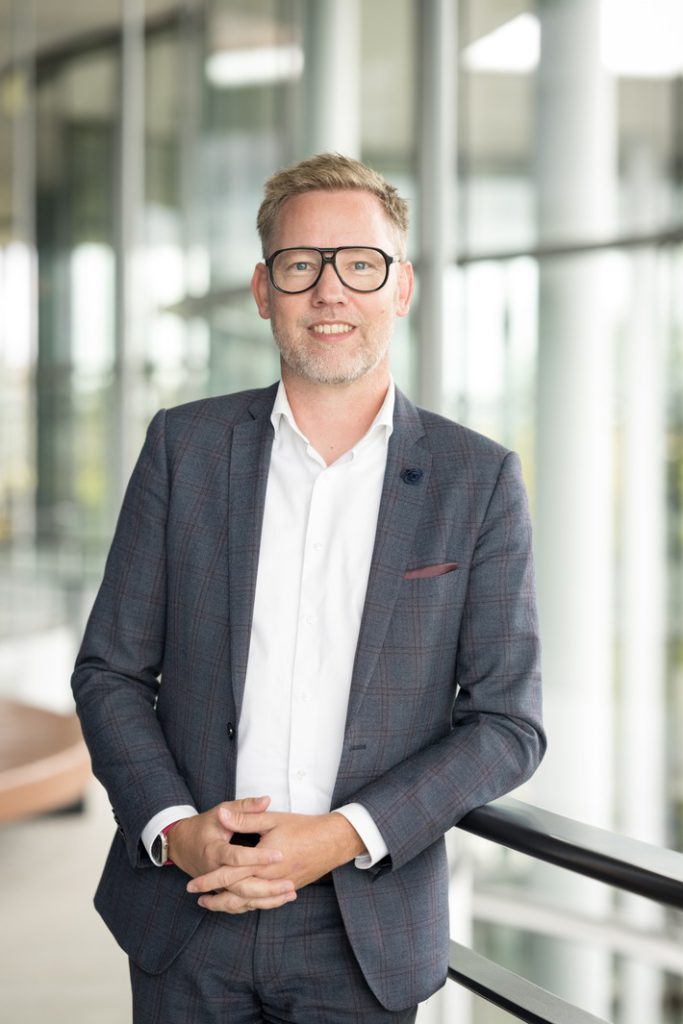
Ron de Jonge: I don’t think Europe suffers from a lack of ambition or capability. We have strong institutions, world-class research, leading companies, talent, and considerable technological expertise. Our challenge is that many of these capabilities remain fragmented—across countries, institutions, industries and organisations.
The real question is whether we can bring them together quickly enough when circumstances change. That is what I would call Europe’s execution gap. It’s not an inability to execute, but a difficulty in translating fragmented capabilities into coordinated action at the speed that today’s environment increasingly requires.
This distinction matters. If we keep diagnosing Europe primarily in terms of what it lacks, we risk overlooking the assets we already have.
For me, the more important question is: How do we translate Europe’s existing strengths into a stronger capability to act? And there is an important qualification. Capability is not an end in itself. Europe’s strength comes from combining economic and technological capability with democracy, the rule of law, individual freedom, and accountable institutions.
So the objective is not simply a Europe that can act. It is a Europe that can act effectively, responsibly, and with democratic legitimacy.
Resilire: You are personally involved in the European Resilience Summit and serve on its Global Advisory Board. Why is that important to you?
RdJ: Because Europe is a conviction for me. I believe that the European model—combining open societies, the rule of law, economic strength, and individual freedom—is something worth taking responsibility for. But these values do not protect themselves.
They need institutions, companies, and leaders that remain capable of acting when conditions become more difficult. That is why resilience matters to me. It is not simply a security issue or a question for risk departments. It is about our ability to preserve what we value while adapting to a changing world.
This is also why I value the European Resilience Summit. The challenges we face no longer fit neatly into individual sectors. Technology affects security. Geopolitics affects supply chains. AI affects public institutions. Economic competitiveness increasingly depends on infrastructure, energy, skills, and access to technology.
We therefore need places where leaders from government, business, technology, academia, and society at large can connect these perspectives.
I see my role on the Global Advisory Board in that context as well. If we argue that leadership means responsibility, then we cannot wait for Europe as an abstract actor, or for governments and institutions alone, to act. Those of us in leadership positions also have a responsibility to contribute our experience, engage with other perspectives, and help turn dialogue into action.
Resilire: What does resilience mean to you?
RdJ: For me, resilience is built before a crisis and revealed during one. We cannot prevent every disruption. Trying to do so would not only be unrealistic; it could lead us to build organisations that are very good at managing known risks but poorly prepared for unexpected change.
The more important question is what happens when assumptions no longer hold. Can an organisation still make decisions? Can it coordinate resources? Can it change priorities? Can it continue to deliver its critical functions?
That is why I think of resilience as capability under disruption.
A business continuity plan alone does not make an organisation resilient. Resilience emerges from the combination of leadership, people, technology, governance, trusted relationships, and the ability to execute under conditions that were not fully anticipated. And most of that has to be built before the disruption occurs.
For me, resilience is built before a crisis and revealed during one.
Ron de Jonge
Resilire: Artificial intelligence is developing at extraordinary speed. How does AI change this resilience challenge?
RdJ: AI changes the speed at which organisations need to adapt. We are seeing technological capabilities evolve faster than many organisations can adjust their structures, skills, governance, and decision-making processes. When technological change accelerates faster than organisational adaptation, the execution gap grows.
But there is a second dimension that I find equally important. AI is changing strategic dependencies. Compute, cloud infrastructure, semiconductors, models, data, and talent can all become what I call strategic control points: assets, capabilities, or positions through which one actor can influence the strategic choices available to another.
However, not every technological dependency is automatically strategic.
That distinction is important. The leadership challenge is to understand which dependencies could materially constrain our future freedom to act. And AI increases the urgency of that question because dependencies can emerge and become strategically relevant much faster than they did in previous technology cycles.
So the executive question is not only: How quickly can we adopt AI? It is also: Which capabilities are we building, which dependencies are we creating, and what happens to our options if the environment changes?
Resilire: Does that mean Europe needs to become technologically independent?
RdJ: No. I think independence is the wrong objective. Sovereignty is not autarky. Europe does not need to build every technology itself, nor should we try to eliminate all dependencies. Interdependence is fundamental to an open economy and can itself be a source of strength.
The strategic task is to distinguish between different kinds of dependency. Some dependencies we can consciously accept. Others we should diversify. And at a limited number of strategic control points, Europe may need sufficient capability or influence to ensure that it cannot be deprived of essential choices.
That is a much more nuanced discussion than simply asking whether a technology is European.
For me, sovereignty ultimately means preserving the freedom to determine and execute our own strategic choices despite external dependencies.
So I would ask a different question: If geopolitical, technological, or economic conditions change, do we still have meaningful options? And can we act on them? That is the test.
Sovereignty is not autarky. Europe does not need to build every technology itself. Interdependence… can itself be a source of strength.
Ron de Jonge
Resilire: Who ultimately carries responsibility for resilience?
RdJ: Resilience is an executive responsibility. Of course we need specialists responsible for cybersecurity, technology, supply chains, risk management, and business continuity. But responsibility for the overall capability of an organisation cannot be delegated to one of those functions.
This leads to something I describe as the responsibility gap. As complexity increases, organisations often respond by adding governance, controls, processes and reporting. Much of that is necessary. But more control does not automatically create more responsibility.
A process can structure a decision. A system can distribute tasks. AI can provide recommendations. None of them can assume responsibility. Leadership becomes particularly visible when the available information is incomplete, the consequences are uncertain, and there is no risk-free option.
That is why I make a deliberate distinction: Capability belongs to organisations. Responsibility belongs to executive leaders. Governance should support responsible judgement, not become a substitute for it.
Resilire: What does this perspective mean for the modernization of the public sector?
RdJ: Government capability is itself part of Europe’s strategic infrastructure. We often frame public-sector digitalisation primarily in terms of efficiency: How can we make a process faster, cheaper, or more automated? Those are legitimate questions, but I think they are too narrow.
The more strategic question is: What capabilities does a modern democratic state need? AI, for example, can improve productivity and enable completely new ways of delivering public services. But democratic institutions operate under requirements that go beyond efficiency.
Government action must be effective, but it must also remain legitimate, accountable, and understandable. That makes trust much more than a soft factor. Trust is part of institutional capability.
A democratic state can remain sustainably capable of acting only if citizens have confidence that its institutions act competently, predictably, and responsibly.
So public-sector modernization should not be understood merely as an efficiency agenda. It is part of Europe’s resilience and capability agenda. The objective is not simply a more digital state. It is a state that is more capable while remaining legitimately capable.
Resilire: Where does Sopra Steria fit into this picture?
RdJ: This is where the strategic discussion meets implementation. From our work at Sopra Steria, I see very concretely how large the gap can be between technological possibility and organisational capability.
A technology can be available without the necessary data being ready. An organisation can run successful AI pilots without becoming genuinely capable of using AI at scale. A public institution can digitalise processes without fundamentally improving its ability to make decisions or deliver outcomes. Technology alone does not close that gap.
This is where I see the role of Sopra Steria as a European technology and transformation partner. Technology matters enormously, but transformation also involves data, processes, architecture, skills, governance, organisational change and leadership.
The objective should therefore not be technology adoption for its own sake. It should be to turn technology into sustainable capability.
That is particularly important in areas such as AI and public-sector transformation, where technical performance, operational reality, responsibility and trust have to come together. For me, this is also where our work connects directly with the wider European challenge: moving from strategic ambition to operational capability.
Resilire: Can individual companies or countries build these capabilities on their own?
RdJ: Increasingly, no. Many of the capabilities we now consider strategic sit across organisational boundaries. Companies depend on infrastructure providers, technology partners, research ecosystems, and supply chains. Governments depend on capabilities from industry and academia. Research needs infrastructure, capital, talent, data, and access to real-world applications. That means cooperation itself is becoming a strategic capability.
Europe needs to become better at connecting capabilities across institutional, sectoral and national boundaries. We need resilient ecosystems involving government, business, academia, and technology partners. That is another reason why I consider platforms such as the European Resilience Summit valuable. Dialogue alone does not create resilience. But without places where different communities can understand each other’s dependencies, constraints and capabilities, coordinated action becomes much harder.
There is one caveat, however. As our ecosystems become more complex, responsibility must not become more diffuse. Cooperation cannot mean that nobody ultimately owns the decision. On the contrary: The more interconnected the system, the more important clarity of responsibility becomes.
We therefore need both: stronger cooperation and stronger leadership.
Resilire: If you look ahead five years, what does Europe need to do now to become more resilient and more capable of acting?
RdJ: The next phase for Europe will be determined by whether we can translate ambition into capability. That means being clear about which dependencies genuinely matter, where they can be accepted, where they should be diversified, and where Europe needs greater capability or influence of its own.
But I would resist the increasingly defensive narrative about Europe. Europe has strong companies, excellent research, skilled people, trusted institutions, and democratic legitimacy. We have many of the ingredients we need. The challenge is to combine them.
Europe’s next challenge will be decided in execution. Our values need institutions capable of defending and advancing them. Our ambitions need organisations capable of delivering them. And our capabilities need leaders willing to take responsibility for how they are used. That is why I remain convinced about Europe. Not because Europe already has all the answers, but because I believe we have the foundations to shape our own future—if we turn our strengths into shared capability and are prepared to act together, responsibly.